
Research and innovation
A Doctoral School, research centres and laboratories in every faculty and school, and scientific journals working for knowledge and the development of the Sahel.
- Doctoral School founded
- 2010
- Doctoral School founded
- doctoral training units
- 6
- doctoral training units
- PhDs awarded
- ~830
- PhDs awarded
- scientific journals
- 2
- scientific journals
Areas
Seven main research areas
Led by the faculties and schools, they address the scientific, social and economic challenges of northern Cameroon and the country.
Economics and management
Markets, organisations, economic policy, entrepreneurship and development.
Doctoral School
Training tomorrow's researchers
Founded in 2010, the Doctoral School organises research training and the preparation of Doctorate/PhD theses under the supervision of research teams. It is organised into six doctoral training units. Selection opens according to the timetable set by MINESUP and the University.
Doctoral training units
- 1Fundamental sciences
- 2Human and social sciences
- 3Languages, literature and language sciences
- 4Engineering sciences
- 5Economics and management
- 6Law and political science
Structures
Research centres and laboratories
Directory of research structures at the University and its faculties and schools.

| Acronym | Structure | Attached to |
|---|---|---|
| CÉRÉ | Research Centre for Educational Studies | ENS |
| CERDISFA | Research Centre for the Didactics of Fundamental and Applied Sciences | ENS |
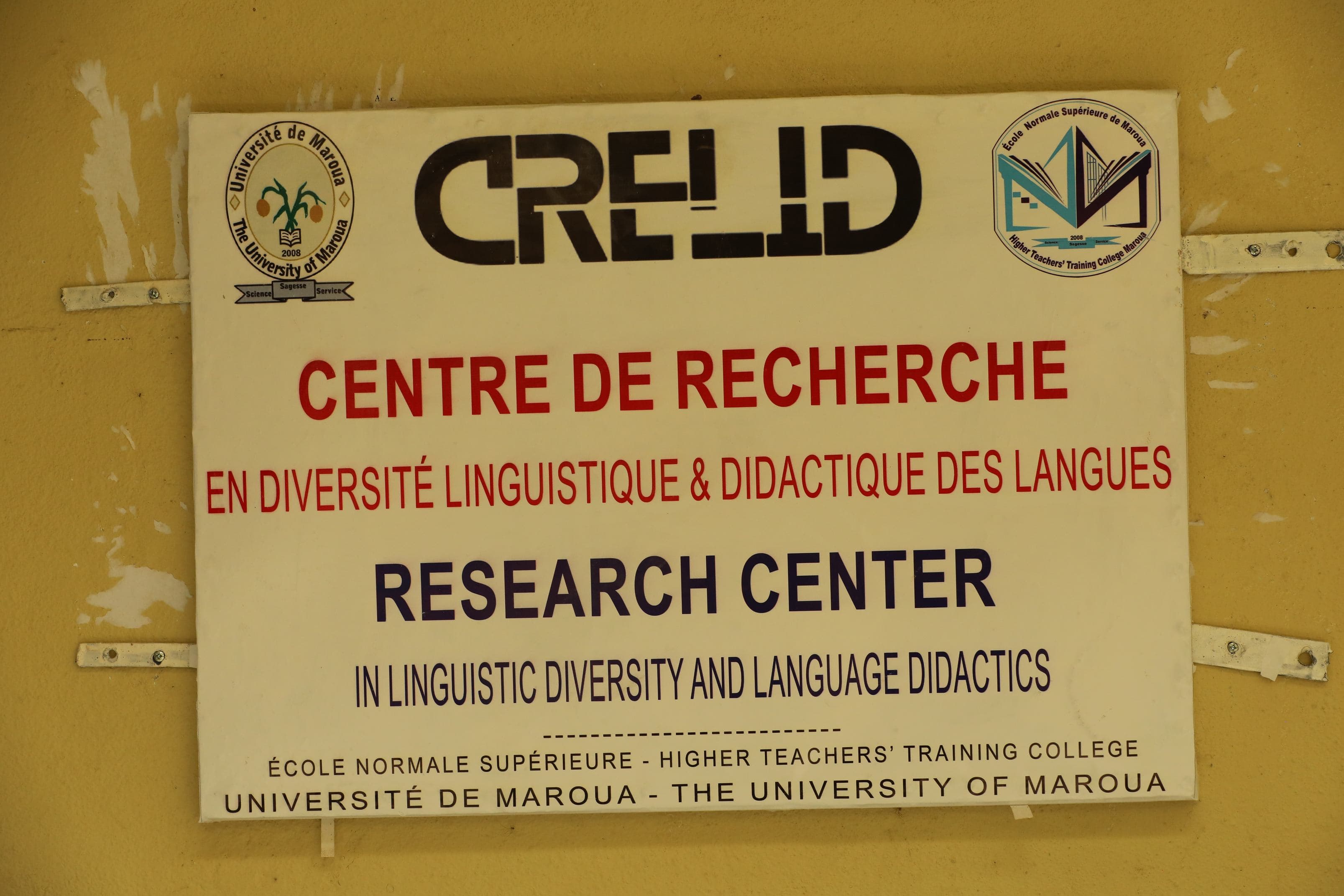
| CRELID | Research Centre for Linguistic Diversity and Language Didactics | ENS |
| CERPSI | Research Centre for Peace, Security and Integration Studies | FALSH |
| CREMPESSA | Research Centre for Political, Environmental and Social Change in the Sahel | FALSH |
| LAVC | Visual Anthropology and Cinema Laboratory | FALSH |
| LCAIC | Artistic Creativity and Cultural Industries Laboratory | FALSH |
| LaRI | Computer Science Research Laboratory | FS |
| LSP | Statistics and Probability Laboratory | FS |
| — | Meteorological Research Centre for Development | UMa |
| GEOTEDEV | Geomatics, Territory, Environment and Development Laboratory | UMa |
| — | Geography Laboratory | UMa |
| CERENVISO | Research Centre for Environmental and Social Dynamics | UMa |
| ESCA | Aesthetics and Artistic Creation Laboratory | UMa |
| CERSCRIDH | Research Centre for Criminal Sciences, Human Rights and International Law | UMa |
Publications
Scientific journals
- RHUMSIKIHumanities, letters and social sciencesFaculty of Arts, Letters and Social Sciences (FALSH)
- Cahiers Économiques de MarouaEconomics and managementFaculty of Economics and Management (FSEG)
Outreach
From research to real-world use
Research results take the form of software, prototypes, decision-support tools, applied studies, expert services, technology transfer or new businesses.
- 1
Research
Laboratories, theses and applied research projects
- 2
Prototype
Technical platforms, CREP and the Digital Simulation Centre
- 3
Incubation
The University's business incubator at ENSPM, supported by MINPMEESA
- 4
Transfer
Patents (CATI), expertise, partnerships with businesses and local authorities